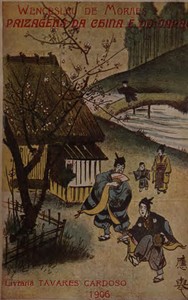
Paisagens da China e do Japão by Wenceslau de Moraes
Published in the early 1900s, Paisagens da China e do Japão (Landscapes of China and Japan) is a unique work. It's not a plotted story in the traditional sense. Instead, it's a series of sketches and essays written by Wenceslau de Moraes, a man who went from being a Portuguese naval officer stationed in Macau to a permanent resident of Japan. The book is his record of the people, places, and customs he encountered after he left his old life behind.
The Story
There's no single narrative thread. Think of it as a guided tour led by a deeply observant and sympathetic outsider who became a local. Moraes writes about his travels, his daily life in Tokushima, his relationships, and his profound immersion into Japanese society. He describes landscapes with a painter's eye, details domestic rituals, and reflects on the philosophical and artistic spirit of the country. The 'plot' is the slow, personal transformation of the author himself, as he navigates the complexities of adopting a new home while remaining, in some ways, forever a stranger.
Why You Should Read It
This book offers something most histories don't: intimacy. You're not getting dates and battles. You're getting the smell of incense in a temple, the feel of a summer festival, and the quiet melancholy of a man who has chosen a path few of his countrymen could understand. Moraes's perspective is priceless because he was there during a pivotal moment—Japan's rapid modernization—yet he was often most captivated by the traditional ways that were starting to fade. His writing is gentle, detailed, and full of genuine affection, even when he's puzzled by something. It feels honest.
Final Verdict
This is a book for a specific, but wonderful, kind of reader. It's perfect for anyone fascinated by Meiji-era Japan, armchair travelers who love immersive cultural writing, or readers who enjoy quiet, reflective memoirs. If you need a fast-paced plot, look elsewhere. But if you want to be transported to another time and see it through the eyes of a man who loved it deeply, Paisagens da China e do Japão is a quiet treasure. It's a portrait of a place, painted with words by someone who made it his home.
This work has been identified as being free of known copyright restrictions. Share knowledge freely with the world.