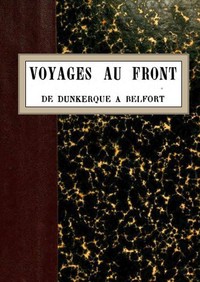
Voyages au front, de Dunkerque à Belfort by Edith Wharton
Most of us know Edith Wharton for her sharp, elegant novels about New York's upper crust. Voyages au front (or 'Fighting France' in English) is something else entirely. In 1915, in the thick of World War I, Wharton didn't stay safely in Paris. She got permission to tour the front lines, from Dunkirk in the north down to Belfort in the east.
The Story
This isn't a novel with a traditional plot. It's a series of travel essays. Wharton takes us along in her car as she navigates checkpoints and ruined roads. We visit makeshift hospitals where she talks to wounded soldiers. We stand with her in town squares reduced to piles of rubble, where life stubbornly continues in cellars. She describes the eerie silence of the front one moment and the booming of artillery the next. The 'story' is her journey to witness and document the truth of the war, moving from the horror of the destruction to a deep admiration for the resilience of the French people.
Why You Should Read It
What makes this book special is Wharton's voice. She's not a soldier or a war correspondent. She's a famous novelist with a keen eye for detail and human nature. Her observations are incredibly vivid. She'll note the way a shopkeeper has neatly displayed a few surviving goods in a shattered storefront, or the polite, tired face of a young officer. You get the big picture of the war's devastation, but also these small, heartbreaking moments of normalcy. It feels immediate and personal, like you're right there with her. It also shows a different side of Wharton—not just a critic of society, but a passionate patriot and a compassionate observer in a time of crisis.
Final Verdict
This is a must-read for Wharton fans who want to see the full scope of her talent. It's also perfect for anyone interested in World War I history, but who wants a perspective that's more human and literary than a straight military account. If you enjoy first-person narratives that put you directly in a historical moment, you'll be captivated. Just don't go in expecting The House of Mirth. Go in expecting a powerful, boots-on-the-ground report from one of the greatest writers of her time.
This masterpiece is free from copyright limitations. Use this text in your own projects freely.