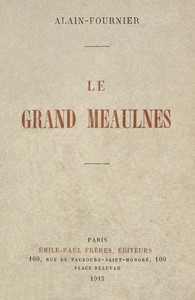
Le Grand Meaulnes by Alain-Fournier
Alain-Fournier’s only novel, Le Grand Meaulnes, is a quiet storm of a book. It’s narrated by François, a shy boy in a rural French village, whose life is turned upside down by the arrival of Augustin Meaulnes—a charismatic, restless teenager everyone calls ‘the Great Meaulnes.’
The Story
One winter, Meaulnes gets lost and stumbles upon a mysterious, crumbling estate where a fantastical, costumed party is in full swing. It’s like a fairy tale. He meets and instantly falls for a girl named Yvonne de Galais. For a few hours, he lives in a perfect, dreamlike world. Then, he has to leave, and when he tries to find the estate again, it’s as if it never existed. The heart of the story follows Meaulnes’s obsessive, years-long search for this ‘lost domain’ and the girl who haunts it. François, our narrator, gets pulled into this quest, helping his friend while watching how this single magical event shapes—and arguably ruins—Meaulnes’s entire life.
Why You Should Read It
This isn’t a plot-heavy adventure. It’s a mood. It captures the intense, all-or-nothing feeling of adolescence better than almost any book I’ve read. That first crush that feels like destiny. The bittersweet pain of realizing childhood is ending. The book asks a tough question: Is it better to have one perfect, fleeting moment, or to never have it at all if you can’t keep it? Meaulnes is a frustrating hero—he’s selfish and often blind to the real people around him, like the loyal François. But you understand his obsession. We’ve all longed for something just out of reach.
Final Verdict
Perfect for readers who love atmospheric, character-driven stories with a touch of mystery. If you enjoyed the nostalgic ache of The Catcher in the Rye or the magical realism of Gabriel García Márquez, you’ll find a kindred spirit here. It’s a short book, but a slow, savouring read. Don’t rush it. Let its strange, sad beauty wash over you. It’s a masterpiece about the most human obsession of all: the search for a lost paradise.
This digital edition is based on a public domain text. It is available for public use and education.