
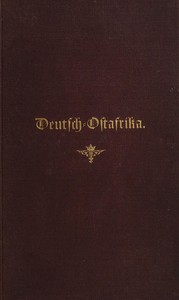
Deutsch-Ostafrika: Geographie und Geschichte der Colonie by Brix Förster
Let's be clear: this isn't a bedtime story. Brix Förster's book is a dense, factual volume written in the late 19th century, intended as a comprehensive guide to Germany's new colony in East Africa (modern-day Tanzania, Burundi, and Rwanda). It's divided into two main parts. The first is a detailed geography lesson, cataloging mountains, rivers, climate zones, and what Förster saw as valuable resources. The second part is a historical narrative, but it's history from a very specific angle—it tells the story of German exploration, treaties with local leaders (often presented as agreements, not conquests), and the establishment of administrative control.
The Story
There's no traditional plot. Instead, the 'story' is the argument Förster is making. He builds a case for the colony's potential and Germany's right and duty to manage it. He describes the land and people systematically, often through a lens of European superiority. The narrative follows the progress of German officials and companies, framing their actions as bringing order and economic opportunity. It's a story of mapping, categorizing, and claiming, told with absolute certainty.
Why You Should Read It
You read this not for entertainment, but for insight. It's a powerful primary source. You get to see the colonial mindset in its own words, without modern commentary getting in the way. The chilling part is how normal and logical it all sounds to Förster. He isn't a cartoon villain; he's a bureaucrat writing a report. That makes it more revealing. When he talks about 'developing' the land or 'guiding' the population, you can analyze the assumptions behind those words. It helps you understand the mechanics of empire—how it was sold to the public back home and justified to those implementing it.
Final Verdict
This book is a specialist's tool, but a fascinating one. It's perfect for history students, scholars of colonialism, or anyone with a deep interest in African history who wants to go beyond secondary accounts. It's not an easy read—the style is dry and the perspectives are dated and often offensive. But if you're willing to sit with that discomfort, it offers an unvarnished, first-hand look at a pivotal and painful period. Pair it with a modern history book for context, and it becomes an incredibly educational, if sobering, experience.
This content is free to share and distribute. Share knowledge freely with the world.
Jennifer Clark
1 year agoThe fonts used are very comfortable for long reading sessions.
Michael Hill
6 months agoGreat reference material for my coursework.
Patricia Moore
9 months agoSurprisingly enough, it creates a vivid world that you simply do not want to leave. I would gladly recommend this title.
James Clark
8 months agoBeautifully written.


Noah Flores
1 year agoHonestly, the depth of research presented here is truly commendable. Don't hesitate to start reading.